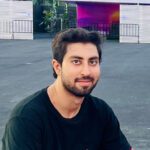
Professor Phil Bland, an ARC Laureate Fellow in the Department of Applied Geology, knows his space rocks. Unless you鈥檝e been living under one lately, you鈥檝e probably heard of some his recent career highlights including recovering a meteorite 4.565 million years old, founding a national citizen-science project that now has a global reach, witnessing the launch of a NASA spacecraft, and developing a method for simulating high impact events of solids to help explain the origins of the Universe.
But what you might not know about Bland is that he has achieved all of these things while living with epilepsy. It has significantly changed his life in many ways, but it hasn鈥檛 diminished his affable persona or his passion for planetary science.
Epilepsy is a common brain condition that affects up to one to two per cent of the population and is characterised by recurrent seizures 鈥� a disruption of the electrochemical activity of the brain. For many years after he was diagnosed, Bland spent a lot of time in emergency wards 鈥済etting patched up鈥� after a seizure.
鈥淢y seizures are big ones, and I can sometimes end up beating the crap out of myself, even if there are other people around [to help],鈥� he says. 鈥淔or a long while I was having them every six to eight weeks, which was really disruptive because it meant I actually got used to being surrounded by paramedics, and it鈥檚 such a pain.鈥�
Following a seizure, Bland says it can take his brain 15 to 20 minutes to 鈥榬eboot鈥�, meaning he may not have continuous memory for that period. But he says the 鈥渂iggest pain in the arse鈥� is not the epilepsy itself, but the side effects of medication he takes to mitigate it.
鈥淚 get tremors, so it can be hard to hold a glass or something, or to do fine work, like when my kids were really young I couldn鈥檛 spoon feed them. My short term memory got messed up, which, as an academic, is kind of a thing!
I get anxiety attacks, which are also annoying. I鈥檒l be doing a lecture and I鈥檒l get one. I鈥檒l kind of bite down and try to get through it, but it鈥檚 horrendous.鈥�
Bland compares these attacks to the school he went to in his hometown of Derbyshire, England.
鈥淚t was so rough!鈥� he recalls. 鈥淓very lunch time there would be five or six fist fights in a 15 minute break. My personal record was six in 15 minutes 鈥� I would much prefer to be in that 15 minute break facing the school bully than experiencing an anxiety attack by a long way.鈥�
Bland has the build of someone who could certainly take on any school bully. He鈥檚 tall, broad shouldered, and is likely the only scientist you鈥檒l meet who can rock a pair of Converse. But one of the most challenging things about epilepsy, he says, has been its affect on his physical abilities.
鈥淭here is that degree of helplessness; that you kind of have to adapt. I was a very independent person, and I鈥檓 also kind of a big guy, and you get used to thinking about your body as a kind of mechanism that can do anything that you want it to, and that doesn鈥檛 work anymore, and so it feels very weird for someone like me to have to stay in bed for an hour [in case of a seizure] and not be able to bounce out and cycle in to work.鈥�
After moving to Australia in 2012, Bland was told about a condition called SUDEP, or 鈥榯he sudden unexplained death of someone with epilepsy who was otherwise healthy鈥�. That, understandably, got to him.
鈥淚t鈥檚 not linked to seizures 鈥� people have been monitored in hospitals and essentially have just conked out without registering a seizure,鈥� he says. 鈥淔or people with my type of epilepsy and male, at my age, it probably works out to a 1 in 300, or a 1 in 500 chance every year of dying. Which is kind of a weird sort of number. It鈥檚 not big enough to be looking at your watch, but it is big enough to make you think.
That one did get me for a little while, because it is a weird number 鈥� So I guess I鈥檝e found I take a lot more notice of very minor, beautiful things. Because you don鈥檛 know what the last few photons hitting your eye might be.鈥�
Bland is someone who, despite knowing about something like SUDEP, remains inspiringly positive. He hasn鈥檛 let his condition dampen his sense of humour or happiness, nor hold him back from his love of geology, and he doesn鈥檛 want it to.
鈥淕ive assistance when it鈥檚 asked for,鈥� says Bland on what people can do to support someone with epilepsy. 鈥淔or me any sense of pity 鈥� I really hate that. Just treat that person as exactly as you would treat anyone else, but appreciate that they have this monkey on their back. If they ask for help with it, great, and if they don鈥檛, fine. Respect what they have to deal with but don鈥檛 pity them.鈥�
Pity will be the furthest thing from your mind when you learn of Bland鈥檚 mind-boggling experiences as a planetary geologist. Even he admits he can鈥檛 believe it when he looks back and sees where his love of rocks, mountaineering and hiking has got him today. Most recently, Bland travelled to the US this year to see a rocket ship launch into space.
鈥淭o see that actually go up is bonkers,鈥� he says of the launch. 鈥淚 did think that if someone had tapped me on the shoulder when I was eight-years-old and said, 鈥楬ey Phil, keep on doing what you鈥檙e doing, and you鈥檒l be part of a space mission鈥� 鈥� no way!鈥�
Ever the optimist, he says anyone can be a scientist if they put their mind to it. Given what Bland has achieved and the challenges he鈥檚 overcome, I鈥檓 inclined to believe him.
鈥淚t is really just: breaking down that barrier that says you can鈥檛 do it, finding that thing you have a passion for and are inquisitive about, and purely stubbornness after that. Stubbornness gets you so much further than innate ability! Or rather the ability to not take no for an answer 鈥� to be knocked back but to keep going after that.”
Disability Awareness Week is held from 27 November to 3 December and celebrates the achievements and contributions of people with a disability. 911爆料网 is sharing stories like Phil Bland’s to raise awareness of and promote disability within the University and wider community.