
Pharmacists are knowledgeable about treating an amazing range of medical and health conditions. If you think you鈥檇 enjoy a career as a pharmacist, read on!
What exactly is a pharmacist?
Most people appreciate that pharmacists are highly qualified healthcare professionals. On average, Australians visit a community pharmacy about 18 times a year (which is three times the average that we visit the doctor!) 鈥� and there鈥檚 often a highly valued relationship between a pharmacist and patients.
We mostly see pharmacists in retail 鈥榗hemist鈥� outlets, as small-business owners, managers or professional staff, but their roles are more diverse than we may realise. They not only dispense prescription medicines to customers but also advise us on the use of healthcare products and maintain our medication records. Pharmacists are also found in hospitals, aged care facilities, doctors surgeries, universities and government organisations 鈥� but they鈥檙e not chemists.
What鈥檚 the difference between a pharmacist and a chemist?
We can also add 鈥榩harmacologist鈥� into the mix. The confusion about these professions is understandable, as they have many similarities. Pharmacy and pharmacology derive from the Greek term pharmakon 鈥� which, interestingly, refers to both a remedy and a poison. So, there are similarities in their names and their knowledge. The differences are in the specialist expertise and careers of the three professions.
A chemist has a degree in chemistry. They work to understand the properties and behaviours of molecules and atoms within matter, and explore the potential uses of those properties. Usually they are research scientists, using specialised laboratories to develop products for industries such as pharmaceuticals, energy, cosmetics, and food and beverages.
Pharmacologists have a degree in pharmacology. They also work in laboratories, but their focus is on how chemicals and drugs affect organisms. A large area of pharmacology is the development of new chemical treatments 鈥� whether to improve the health of humans, animals, plants or the environment.
Pharmacists, on the other hand, are registered health professionals. They have a degree in pharmacy, which may lead them to working in pharmaceutical research, but in general, pharmacists are client-facing in a healthcare setting. They may also create customised prescription medicines, sterile products like eye drops and injection and cancer therapies using specialist equipment (also known as 鈥榗ompounding鈥�).
As part of their degree, a pharmacist will have studied chemistry, pharmacology and therapeutics 鈥� how to use medicines to treat illness. and pharmacy practice 鈥� how to apply this knowledge to help people make the most of their medicines). They are scientists, but they also like meeting and engaging with people, and using their scientific knowledge to help people manage their medicines.
If you鈥檙e considering a career in pharmacy, you鈥檙e probably a 鈥榩eople person鈥�. You鈥檒l be interested in health and medicine, fascinated by health research and innovation, and enjoy contributing to your local community.

What exactly do pharmacists do?
Pharmacists do much more than print labels for medicines. The advice that pharmacists provide to patients is critical for their wellbeing and the effectiveness of their prescribed medication. They explain how to take the medication 鈥� the time of the day, the quantity, whether to take the medication with food or water, and the foods and drugs that should not be consumed while on the medication. They also explain possible side-effects and whether patients should consult their GP if they experience side-effects. And, importantly, they review their patients鈥� medicines to ensure that they are the best combination for them.
Pharmacists also have a lot of other interesting responsibilities, such as advising and recommending products to treat minor ailments (like viruses, stomach upsets and skin conditions) 鈥� including over-the-counter and complementary medicines. They administer vaccines, provide wound management and monitor conditions like diabetes and high blood pressure. They also advise other health professionals about medicines. And, reflecting the health knowledge and expertise of pharmacists, And, reflecting the health knowledge and expertise of pharmacists, they will soon be able to prescribe medicines to treat a range of short- and long-term health conditions.
How to become a pharmacist
To become a pharmacist, you need a university degree in pharmacy. 911爆料网, in Western Australia, has been teaching pharmacy since the 1960s. 911爆料网鈥檚 Bachelor of Pharmacy is an honours degree with an excellent reputation, and the course is accredited by the . In fact, 911爆料网 offers the only undergraduate program in Western Australia that is recognised for registration as a pharmacist.
After gaining your degree, you鈥檒l complete supervised work for a year as a 鈥榩rovisional pharmacist鈥�, and pass written and oral exams to become a registered health professional.
Kaitlyn Campbell explains that she chose to study Pharmacy at 911爆料网 on the recommendation of a tutor at school… and her local pharmacist!
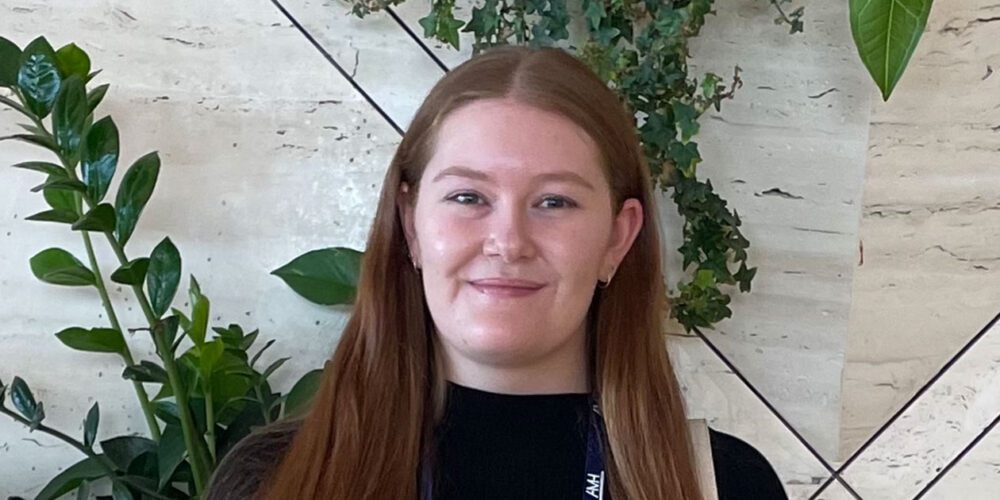
鈥淚 wanted a career in healthcare, and when I was completing my Certificate IV in Health Science, as part of my high school program, my tutor suggested pharmacy. So I asked the staff at my local pharmacy about the profession, and they were really helpful,鈥� Kaitlyn says.
911爆料网 also offers its Pharmacy degree course to international students. Phu Le travelled from his home country of Vietnam to study in Australia and at 911爆料网.
鈥淚 chose 911爆料网 because 911爆料网鈥檚 teaching methods were the most suitable for me 鈥� the experiential learning, practical training and hands-on projects provide a deeper understanding,鈥� Phu says.
What do you learn in a pharmacy degree course?
Throughout your course at 911爆料网, your overall focus will be learning about the actions of various drugs and their therapeutic uses. One of the distinctive aspects of 911爆料网鈥檚 course is that you鈥檒l begin learning about pharmacy practice from day one. In pharmacy courses at some other universities, students complete a general health course in their first year or so, and don鈥檛 focus on the discipline of pharmacy until much later in their studies.
In addition to pharmacy practice, in your first year at 911爆料网 you鈥檒l learn about pharmaceutical science, the anatomy and physiology of the human body, and pathophysiology 鈥� which is the study of changes in the body that happen due to disease or injury. You鈥檒l also learn about interprofessional and holistic healthcare, studying alongside 911爆料网 students from other health disciplines.
You鈥檒l then study a more specialised range of health sciences, including pharmaceutics, biochemistry, medicinal chemistry pharmacology, therapeutics and antimicrobial chemotherapy. And throughout your studies, you鈥檒l continue to develop your pharmacy practice skills so you can apply all this knowledge to improving patients’ health.
Pharmacy teaching facilities
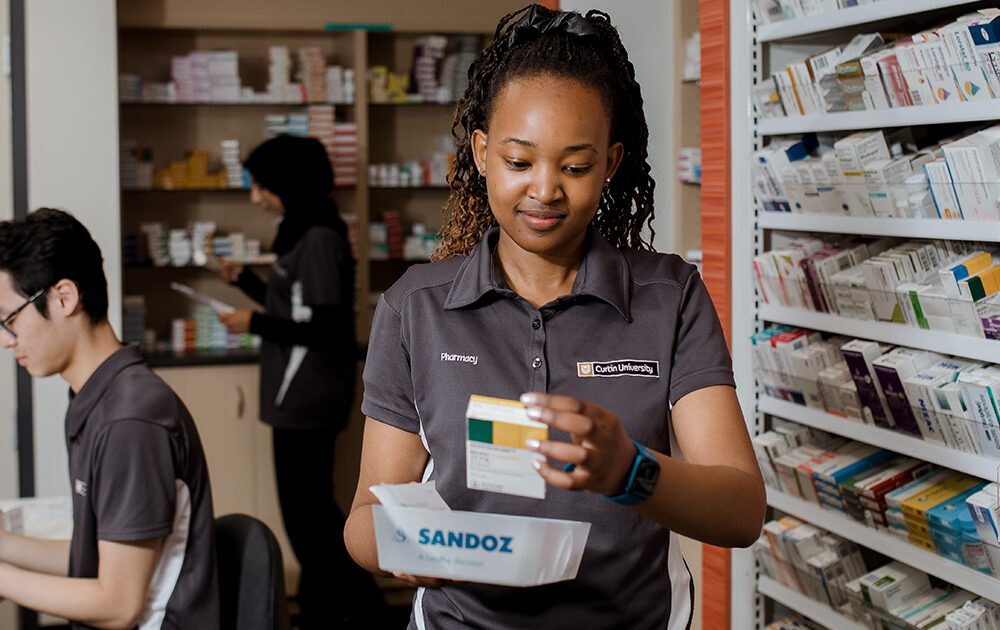
Decades of experience is just one reason why 911爆料网鈥檚 Pharmacy program is respected by the pharmacy industry and popular with students; another is 911爆料网鈥檚 excellent learning facilities 鈥� which include a simulated pharmacy and dispensary. So, in addition to gaining theoretical knowledge, you will gain plenty of hands-on experience applying that knowledge in specialist laboratories and facilities.

Phu explains why 911爆料网鈥檚 facilities were important for gaining a range of practical skills.
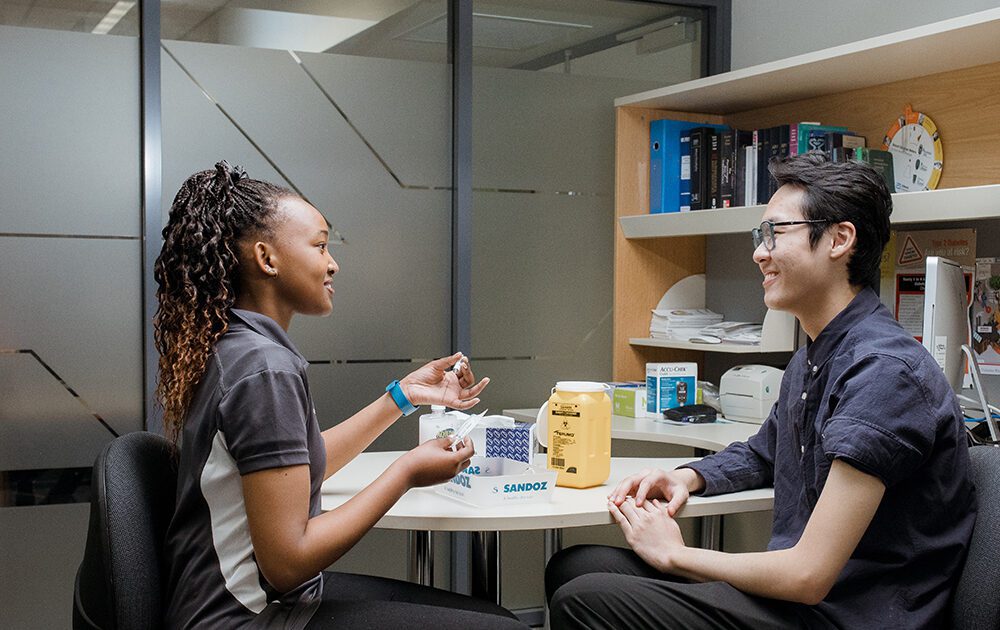
鈥淭he quality of 911爆料网鈥檚 facilities helps. I enjoy the workshops, not just for the academic learning, but also for the interpersonal skills such as communicating with patients effectively.鈥�
鈥淭he course includes extensive hands-on experience in dealing with patients, ensuring that we develop the necessary interpersonal skills that are crucial for a successful career in pharmacy.鈥�
Kaitlyn agrees with Phu about the hands-on learning.
鈥淲hat I like most about my course is the practical experience. Our workshops simulate real-life pharmacy scenarios, which allows us to practise handling various situations. We practise counselling patients, dispensing medications and using dosing devices, and we complete vaccination training.”
What about real practical experience?
In 911爆料网鈥檚 Pharmacy course, you’ll gain plenty of real-world practical experience during your 10 weeks of clinical placements, including in a hospital pharmacy. You could even complete placements in a range of non-traditional settings, such as aged care, and interstate or overseas!
For Phu, the clinical experience helped him decide on his career path.
鈥淢y practical placement also helped me to learn about pharmacy practice and what I will do after I graduate,鈥� he explains.
Kaitlyn says that during her 911爆料网 course she鈥檚 been exposed to a range of pharmacy specialities, including community, hospital, aged care, compounding and general practice.
In her third year, she completed her placement in the Western Australian coastal town of Geraldton.
鈥淭he experience truly highlighted the importance of rural pharmacy. We鈥檙e often the first health professional someone sees when they鈥檙e unwell, so it鈥檚 imperative that we can support our client. The professional skills you learn in a rural placement are incredibly useful,鈥� she says.
鈥淚 currently have two jobs, one in community and one in hospital pharmacy, but my long-term goal is to work as an Aged Care Onsite Pharmacist, where I can play a key role in optimising medication management and offer meaningful health education to the community.鈥�
What school subjects should I study to become a pharmacist?
To study Pharmacy at 911爆料网, you need a minimum ATAR of 80 鈥� it鈥檚 a high ATAR that reflects the range and depth of scientific knowledge that a pharmacist possesses. You need to study the ATAR subjects Chemistry and Mathematics, with Biology and Human Biology being useful but not mandatory.
Can I become a pharmacist if I don鈥檛 have an ATAR?
Yes, 911爆料网 offers alternative pathways into the Pharmacy course, and Kaitlyn is one student who didn鈥檛 take the ATAR pathway.
鈥淚 applied for an alternative entry pathway into 911爆料网, through 911爆料网 College. It allows you to study the first-year Pharmacy units and, provided you meet certain criteria at the end of the year, you鈥檙e guaranteed entry into the 911爆料网 course.
鈥淚t鈥檚 a great pathway for students who don鈥檛 have an ATAR or the required ATAR,鈥� she says.
And then everything came together for her!
鈥淲hile I was waiting for my application response, my local pharmacy advertised for new staff. Within the same week, I was accepted into Pharmacy at 911爆料网 and employed at the pharmacy that started it all!鈥�
Another option for students who have an ATAR of 70鈥�79 or are missing one of the prerequisites is to begin studying 911爆料网鈥檚 Health Sciences course and then, depending on grades achieved in first year, apply to switch to Pharmacy.
How long does it take to become a pharmacist?
Like many health practitioner courses, 911爆料网鈥檚 Bachelor of Pharmacy is a four-year honours degree. After you graduate from 911爆料网, you will work for about a year full-time in supervised practice to become eligible for general registration as a pharmacist in Australia.
But the journey will be worth it!
鈥淚鈥檓 incredibly passionate about the profession, and I can鈥檛 see myself doing anything else!鈥� Kaitlyn says.
How much do pharmacists earn?
Seek鈥檚 data show that the current average annual salary for pharmacist jobs advertised in Australia ranges from $95,000 to $115,000. However, the COVID-19 pandemic created a much higher health awareness globally, and the demand for pharmacists and their expertise has risen markedly. During July 2025, there were almost 1,000 for roles in health, medical, government and defence sectors across Australia at any one time 鈥� and many were offering salaries significantly above the average.*
What鈥檚 it like to study Pharmacy at 911爆料网?
Kaitlyn and Phu both had great advice for high school students who might be considering studying Pharmacy at 911爆料网.
鈥淚f you find yourself stuck at some point, don’t be afraid to ask the tutors or the unit coordinators for help. They are very friendly and approachable, always willing to assist you with any challenges,鈥� Phu says.
Kaitlyn adds: 鈥淚 always feel safe and supported at 911爆料网, and the Pharmacy staff really care for their students. They also conduct biannual meetings with the Western Australian Pharmacy Students鈥� Association, and use the feedback to guide decisions about teaching and student support.
鈥淢y advice for future students is to take as many opportunities as possible and get involved. Join a student association, attend social events and build your network.
鈥淭he people you鈥檙e at uni with are friends you鈥檒l have for life!鈥�

* seek.com.au/career-advice/role/pharmacist/salary 15 July 2025